How to Increase Hemoglobin: Complete Guide for All Ages and Conditions
Hemoglobin is a protein in red blood cells that carries oxygen from your lungs to the rest of your body. When hemoglobin levels drop, your body does not get enough oxygen. This can lead to tiredness, weakness, pale skin, shortness of breath, and dizziness.
If you are searching for how to increase hemoglobin, this complete guide explains everything in simple and clear language. It covers natural methods, diet plans, quick improvement tips, and special advice for pregnancy, children, elderly people, and patients with medical conditions.
What Is a Normal Hemoglobin Level?
Normal hemoglobin levels usually range:
- Men: 13.5–17.5 g/dL
- Women: 12.0–15.5 g/dL
- Children: 11–16 g/dL (depends on age)
If levels fall below normal, it is called anemia. Before trying to increase hemoglobin levels, it is important to understand the cause. Common causes include:
- Iron deficiency
- Vitamin B12 deficiency
- Folate deficiency
- Blood loss
- Chronic diseases (CKD, cancer)
- Pregnancy
- Recent surgery
Now let’s understand how to increase hemoglobin in different ways.
See also How to Increase Blood in Body Naturally, Fast, and Safely
How to Increase Hemoglobin Naturally
Many people want to know how to increase hemoglobin naturally without immediately taking medicines. Natural methods focus on improving diet and nutrient absorption.
1. Eat Iron-Rich Foods
Iron is the main mineral needed to produce hemoglobin.
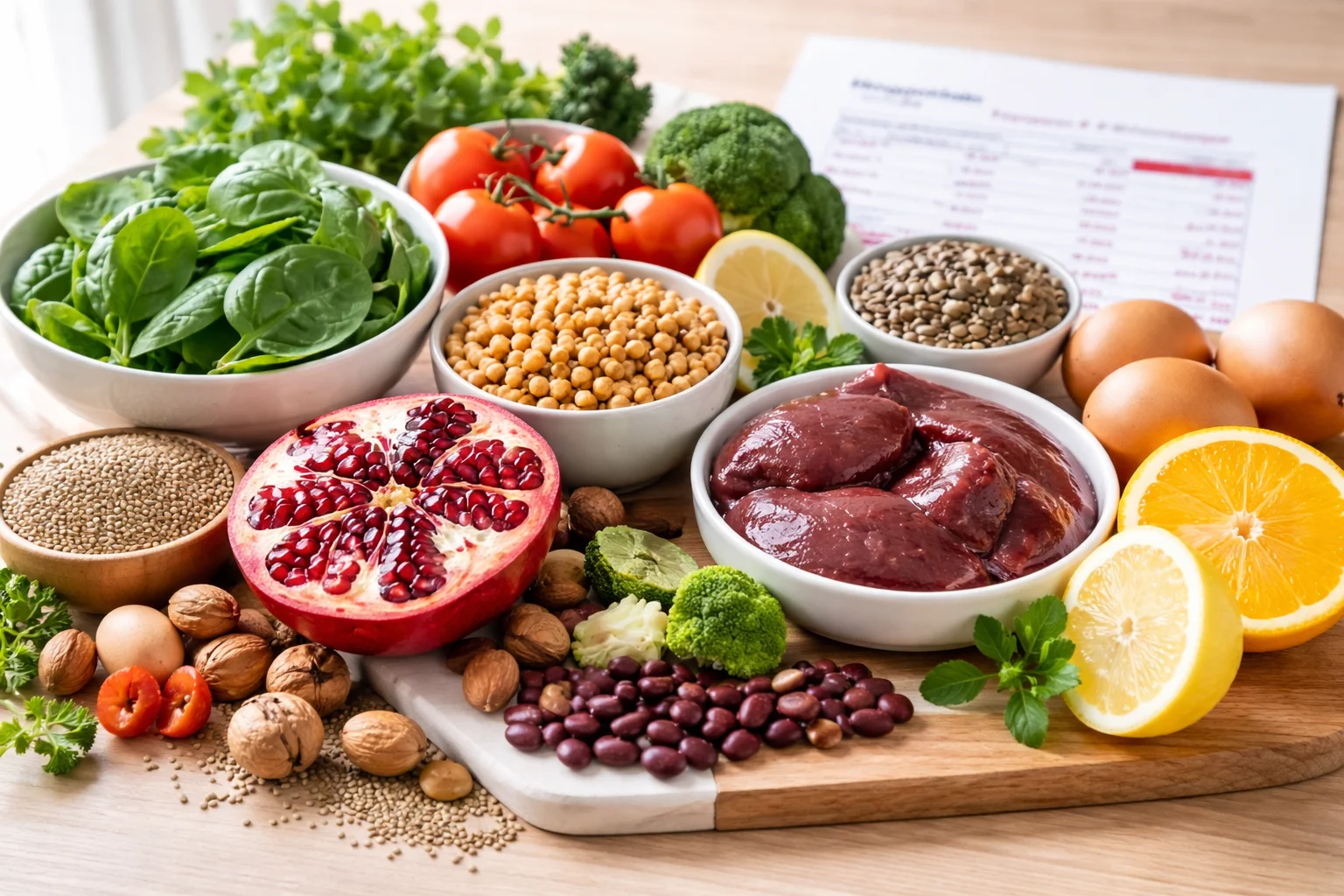
Good sources include:
- Spinach
- Lentils
- Beans
- Red meat
- Chicken liver
- Fish
- Pumpkin seeds
- Dates
- Pomegranate
- Beetroot
Animal sources (heme iron) are absorbed better than plant sources (non-heme iron).
2. Add Vitamin C
Vitamin C helps your body absorb iron better. If you are trying to increase hemoglobin in the blood, combine iron-rich foods with:
- Oranges
- Lemon
- Guava
- Tomatoes
- Bell peppers
- Amla
For example, drink lemon water with meals that contain spinach or lentils.
3. Improve B12 and Folate Intake
Vitamin B12 and folic acid are also necessary for red blood cell production.
Sources include:
- Eggs
- Milk
- Yogurt
- Fortified cereals
- Leafy green vegetables
- Beans
If you are vegetarian, you may need B12 supplements after medical advice.
4. Avoid Iron Blockers
Tea, coffee, and high-calcium foods can reduce iron absorption. Avoid drinking tea or coffee immediately after meals.
These natural methods are the safest way to increase hemoglobin levels naturally.
How to Increase Hemoglobin Level Quickly
Some people need fast improvement, especially before blood donation or medical procedures. If you are searching for how to increase hemoglobin level quickly, follow these steps:
- Increase iron intake daily
- Add vitamin C with every iron meal
- Take prescribed iron supplements
- Eat small frequent meals
- Stay hydrated
Iron supplements often show improvement within 2–4 weeks. However, significant increases may take longer.
How to Increase Hemoglobin in a Week
If you need short-term improvement, such as preparing for blood donation, here is a 7-day plan idea:
Daily plan:
- Morning: Warm lemon water + soaked raisins
- Breakfast: Eggs or fortified cereal
- Lunch: Spinach or lentils with lemon
- Snack: Pomegranate or guava
- Dinner: Chicken, fish, or beans
While it is possible to slightly increase hemoglobin in a week, severe anemia usually takes longer to correct. Always monitor levels with a blood test.
How to Increase Hemoglobin for Blood Donation
Blood banks require a minimum hemoglobin level. To prepare:
- Eat iron-rich foods 2–3 weeks before donation
- Avoid junk food
- Sleep properly
- Drink enough water
- Take doctor-approved iron supplements if needed
This improves your chances of meeting eligibility criteria.
How to Increase Hemoglobin in Pregnancy
Pregnant women often experience anemia because the body needs more blood to support the baby.
If you are searching for how to increase hemoglobin during pregnancy or how to increase hemoglobin in pregnancy, focus on:
- Iron supplements prescribed by a doctor
- Folic acid tablets
- Iron-rich foods daily
- Vitamin C intake
- Regular blood tests
Pregnancy anemia should always be managed under medical supervision.
How to Increase Hemoglobin in Child
Children may develop anemia due to poor diet or rapid growth.
To increase hemoglobin in child:
- Provide iron-rich meals
- Include eggs, beans, spinach
- Give citrus fruits
- Avoid excess junk food
- Follow pediatrician advice
Iron syrups may be prescribed in some cases.
How to Increase Hemoglobin in CKD Patients
Chronic Kidney Disease (CKD) affects hemoglobin production because kidneys produce a hormone called erythropoietin.
If you are searching for how to increase hemoglobin in CKD patients or how to increase hemoglobin in CKD patients naturally:
- Iron supplementation is often necessary
- Erythropoietin injections may be prescribed
- Balanced diet with controlled potassium and phosphorus
- Regular medical monitoring
CKD patients should never self-medicate. Treatment must be supervised by a nephrologist.
How to Increase Hemoglobin in Cancer Patients
Cancer and chemotherapy can lower hemoglobin levels.
If you are looking for how to increase hemoglobin in cancer patients or how to increase hemoglobin naturally for cancer patients:
- Doctor-guided iron therapy
- Nutrient-rich diet
- Protein intake
- Blood transfusion if severe
- Erythropoiesis-stimulating agents (if recommended)
Always consult an oncologist before taking supplements.
How to Increase Hemoglobin in Old Age
Older adults may develop anemia due to nutrient deficiency or chronic disease.
To increase hemoglobin in old age:
- Balanced diet
- B12 supplementation
- Iron intake
- Regular health check-ups
- Treat underlying conditions
Elderly people may absorb nutrients less efficiently, so supplements are sometimes required.
How to Increase Hemoglobin After Surgery
Blood loss during surgery can reduce hemoglobin levels.
To increase hemoglobin after surgery:
- Iron-rich soft foods
- Adequate protein intake
- Vitamin C
- Doctor-prescribed supplements
- Follow-up blood tests
Recovery depends on the type of surgery and overall health.
How to Increase Hemoglobin Levels Naturally and Safely
For long-term health:
- Maintain a balanced diet
- Avoid crash dieting
- Treat chronic illnesses
- Do regular health check-ups
- Avoid unnecessary iron supplements
Too much iron can also be harmful. Always test before starting supplements.
When to See a Doctor
Seek medical advice if you experience:
- Extreme fatigue
- Chest pain
- Severe dizziness
- Very low blood test results
Sometimes low hemoglobin may indicate serious health conditions that require proper diagnosis.
Final Thoughts
Understanding how to increase hemoglobin involves more than just eating spinach or drinking juice. The right approach depends on age, health condition, and the severity of anemia.
Whether you want to increase hemoglobin levels naturally, improve hemoglobin quickly, manage anemia in pregnancy, support a child, prepare for blood donation, or treat chronic conditions like CKD or cancer, proper diagnosis and a structured plan are essential.
Healthy nutrition, correct supplementation, and medical supervision together provide the safest and most effective way to restore hemoglobin to normal levels.